Living with the History of Slavery
Between 1635 and 1848 slavery was legal in Connecticut. Though many people are under the impression that slavery was a phenomenon unique to the American South, this was not the case. In fact, throughout its long and storied past, Connecticut maintained the largest population of enslaved people in New England. Generations of Black and Indigenous people were bought, sold, abused, and forced to work without pay here in the Constitution State. Yet, few have had the opportunity to learn their names and hear their stories.
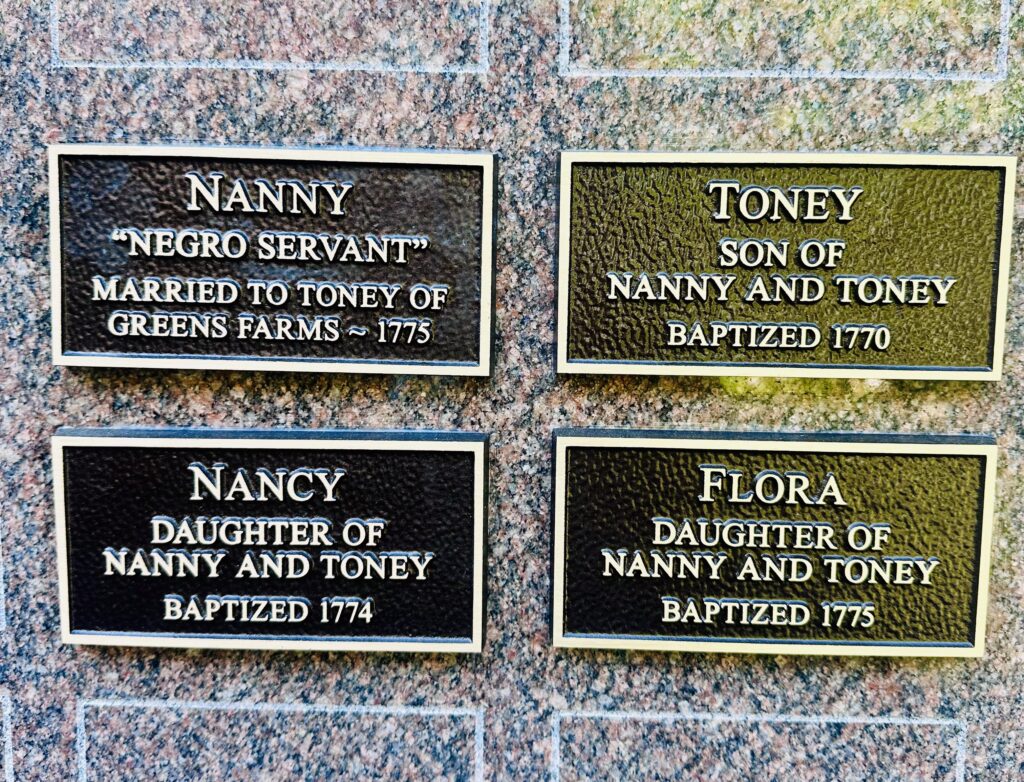
Fairfield’s First Church Congregational wants to change that by evaluating their own past involvement with slavery. Current research confirms that between 1692 and 1806 four ministers of Fairfield’s First Church Congregational enslaved no less than ten people, most of whom were children.

In this way, the ministers of First Church resembled many other Connecticut residents and members of the clergy. Slavery was a critical part of the economy in New England, and a significant portion of middle and upper middle class residents owned between one and three enslaved people. Often, these slaveholders were subsistence farmers, who had other roles in the community. In these circumstances, male slave labor shadowed whatever business the slaveholder was in. This was true for enslaved women as well, who were most frequently employed in difficult household tasks like mending clothes, cooking, cleaning, caring for children, and laundry. Enslaved children, meanwhile, were forced to perform light agricultural labor, assist in housework, or carry out errand work, like fetching well water.

The ten individuals highlighted here are symbolic of the First Church’s historical complicity in a labor system which brutalized millions of people on both sides of the Atlantic.
Jane and the Unidentified Boy, Phillis, Dan, Dauphin, Toney, Nanny, Toney, Flora, Anna